
Build the site around the way buyers explore a contractor.
A construction website should help visitors move from understanding the company to evaluating its services and experience. A clear structure makes that journey easier without forcing every visitor through the same path.
Homeowners, property managers, commercial clients, and project developers may arrive with different questions. One visitor may want to see renovation examples; another may need to understand commercial project capabilities, qualifications, or the process for requesting a proposal. Organize the website so each audience can find relevant information quickly.
Organize pages by customer intent
A services page should explain the work the company actually takes on, while project pages provide examples of that work. Company information can introduce the team, approach, credentials, and relevant business details. Contact information should remain easy to reach from these key pages.
Avoid putting every service, project, and business detail into one long page. A well-organized website can use a main overview page to introduce the company, then link to focused pages for visitors who want more detail. This also creates a logical structure for search engines to understand the relationship between the pages.
A project page should tell more than “Here are our photos.”
A project portfolio works harder when it explains the project type, the contractor’s role, and why the example is relevant to a potential customer.
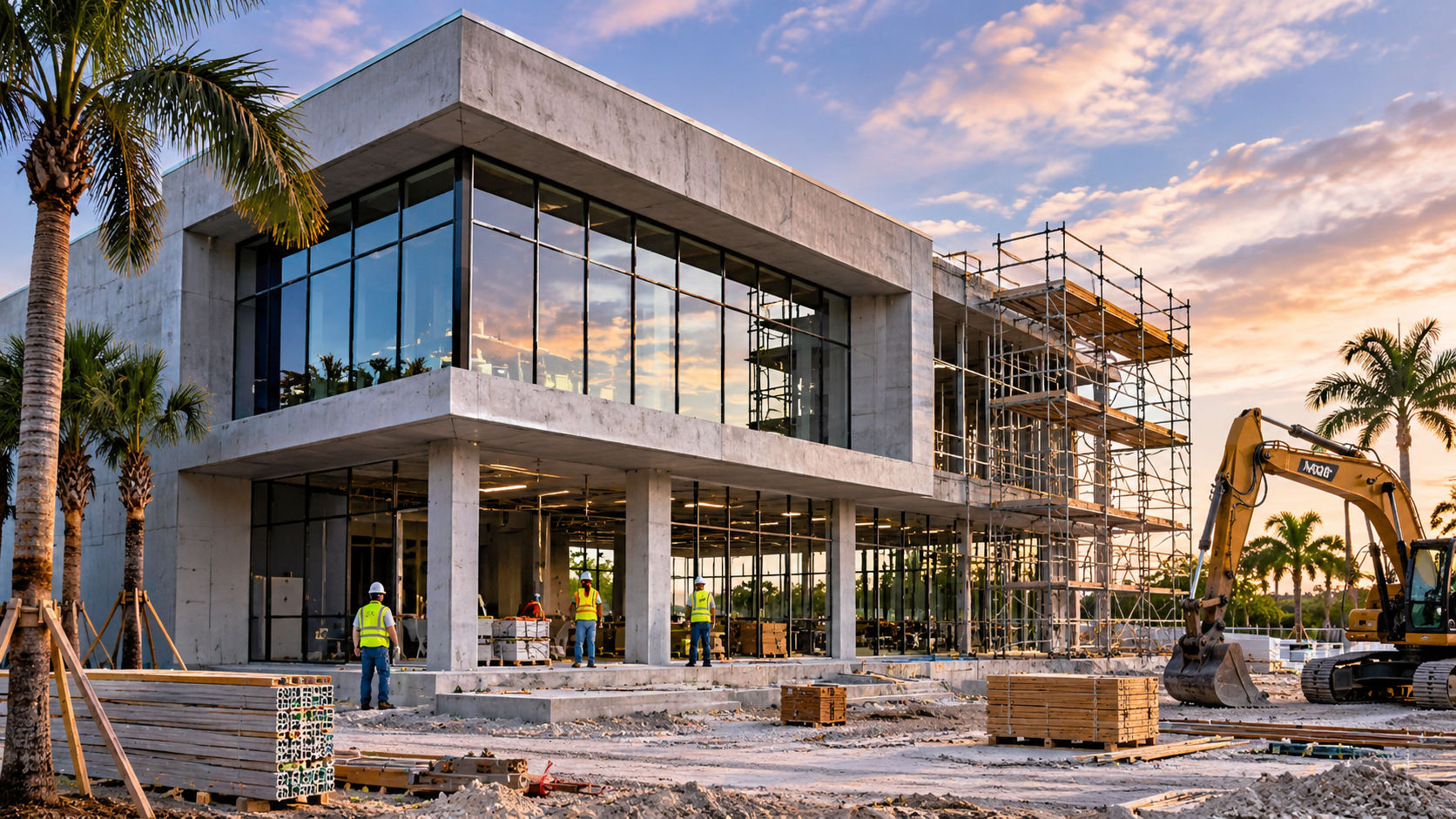
Show the work. Explain the role. Give it context.
A strong project detail page connects visual proof with the information a buyer needs to assess a similar project. It should explain what was completed, what the contractor handled, and what made the project distinctive.
Include authentic photographs, a concise project description, and a link to the matching service page. If a project involved several phases, explain the relevant phases in plain language. Do not publish client details or performance claims without permission and verification.
Construction website design services ↗Use project evidence that answers buyer questions
A visitor should be able to understand whether the company has experience with work similar to their own. A useful project story can describe the challenge, the agreed scope, the contractor’s responsibilities, and the completed work. Where appropriate, include approved details about materials, design considerations, or coordination with other trades.
Avoid relying only on a photo gallery with no captions. Image captions and descriptive alternative text help visitors understand what each image shows, including people using assistive technology. Use original, appropriately sized images and compress them so the portfolio remains fast on mobile devices.
Turn the website plan into a practical build process.
A clear sequence keeps the project focused on the business, the content customers need, and the experience across devices. The exact schedule depends on page count, content readiness, integrations, and review requirements.
For a broader overview, see our website design services.
Discover
Understand services, customer types, project goals, existing website issues, and the information customers need before making contact.
Business + audienceStructure
Plan navigation, service pages, project stories, company information, and the main contact path before visual design.
Site architectureDesign & build
Create responsive page layouts, add approved content and imagery, and check that the site works across screen sizes.
Design + developmentReview & launch
Test forms, links, mobile layouts, page titles, image display, and essential technical settings before publishing.
QA + launchPlan content before the design is finalized
Construction websites often depend on project photographs, service descriptions, company information, and customer testimonials. Collecting these materials early helps avoid empty portfolio layouts or generic placeholder content at launch.
Decide who will review copy, approve project images, and provide business details. Confirm the intended audience and primary enquiry action before the design is completed. These decisions make the website easier to maintain after launch.
Make it easier for a qualified buyer to take the next step.
A professional construction website should answer the basic questions before asking a visitor to contact the business. Clear information helps people decide whether the company may be a suitable fit for their project.
The goal is not to add as many buttons as possible. Use consistent calls to action, explain what happens after an enquiry, and keep the contact route easy to find.
Clear services
Explain what the company does, who it works with, and which project types are a good fit. Avoid vague service descriptions that leave visitors unsure about the scope.
Relevant proof
Show authentic project photographs, verified scope, and the contractor’s actual role. Use case studies when there is enough detail to make them meaningful.
Trust information
Include accurate credentials, business details, testimonials with permission, and useful information about the team and working process.
Simple contact path
Make it clear how to enquire and what information helps the team respond. Keep forms practical and avoid asking for unnecessary personal details.
Mobile usability
Make phone numbers, navigation, buttons, and form fields easy to use on smaller screens. Check text spacing and ensure important content is not clipped.
Make the service area clear—and keep it truthful.
A construction company’s website should describe the areas where it actually accepts projects. Mention nearby communities only when they reflect the business’s real service footprint and the company is prepared to work there.
Local relevance can come from useful project examples, service-area details, customer questions, and accurate business information. Simply repeating a city name across multiple paragraphs does not make a page more helpful.
Avoid creating a separate page for every nearby location just to insert a place name. A location page should have a clear purpose, useful local information, and distinct content that helps customers in that area.
WebRise Media works remotely with US clients. This page describes website design services for construction businesses in the target market; it does not claim that WebRise Media has a physical local office in Sarasota.
Learn more about our website design services or visit the WebRise Media homepage.
Construction website planning FAQs.
Practical considerations before planning a new contractor website or redesign.
Construction website design ↗What should a construction company website include?
Clearly explain services, project types, relevant experience, service area, and how to contact the company. A portfolio, individual service pages, credentials, and estimate form can be added based on the business and its customers. The most useful structure depends on the contractor’s actual work and the questions prospective clients ask.
Should every construction project have its own page?
Not necessarily. Create an individual project page when there is enough genuine information to explain the scope, company role, photographs, and useful context. A gallery may be sufficient for smaller examples. Each project page should provide distinct value rather than repeat the same short description.
What should a contractor estimate form ask?
A useful form may ask for contact details, project type, location, timeline, and a short description. Add budget or file-upload fields only when they help the team qualify or respond to enquiries. Keep the form easy to complete on mobile and explain how the information will be used.
Can construction website design include SEO?
SEO foundations can include descriptive page titles, useful service content, relevant internal links, image alt text, and technical checks. Ongoing SEO may also involve content development, performance improvements, and monitoring. Rankings depend on many factors, so specific positions cannot be guaranteed.
Why are project photos important on a contractor website?
Authentic project photographs help visitors understand the type and quality of work the company has completed. Captions and project context make images more informative. Use approved images and accurate descriptions rather than stock photos presented as the company’s own work.
Does WebRise Media have a local office in Sarasota?
WebRise Media works remotely with US clients. This page does not claim a physical local office in Sarasota. The page discusses website design services for construction businesses serving the target market.
How can we start a construction website project?
Share your current website, the services you want to promote, and the types of projects you want to attract. It is also useful to gather project photographs, business information, and any existing brand assets. WebRise Media can review the requirements and discuss a suitable website plan.
Plan a website that helps the right customers understand your construction business.
Start with your services, project evidence, and the questions buyers need answered. Then build a website structure around those decisions, with clear navigation and a practical contact path.